Trackless Transfer Cart Working Conditions: Floor, Slope & Space Requirements
Learn how to evaluate floor conditions, load capacity, slopes, turning space, travel distance and indoor or outdoor use before selecting a trackless transfer cart. Get practical guidance from PEISA.
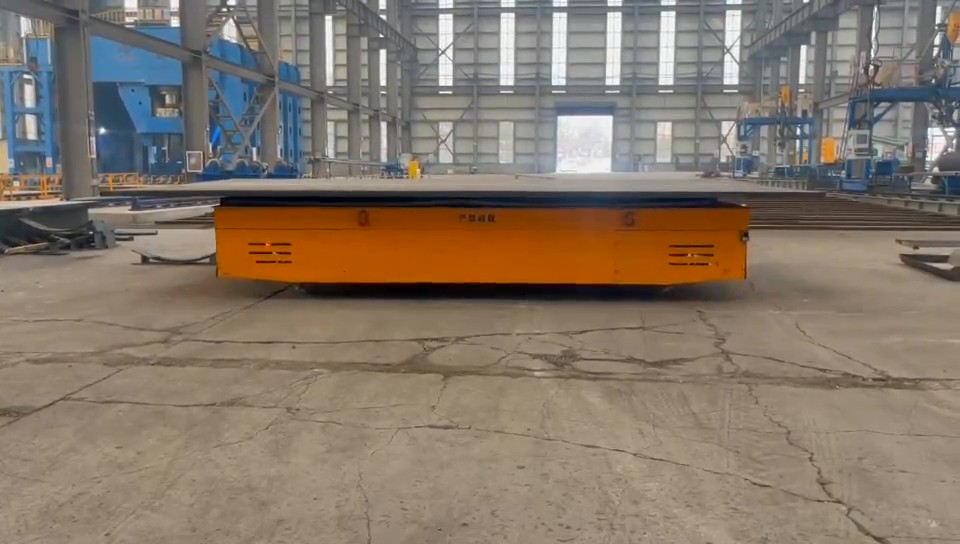
A trackless transfer cart is a battery-powered material handling vehicle that moves directly on the factory floor without the need for rails. It is usually operated by a wireless remote control and can transport loads ranging from 1 to 150 tons. Since it does not follow a fixed track, the transport route can be adjusted to suit the layout of the workshop and the actual handling requirements.
2. Floor Requirements for Trackless Transfer Carts
Trackless transfer carts run directly on the floor, so the floor condition is an important factor when selecting the right equipment.
Most factory workshops and warehouses have epoxy-coated or smooth concrete floors, which are generally suitable for trackless transfer carts. However, floor conditions can vary in heavy machinery plants and outdoor working areas. In these cases, the floor should be checked before choosing the equipment.
Here are some common situations to consider:
1. Rough concrete floors
Trackless transfer carts can operate on outdoor concrete floors with a relatively rough surface, provided the floor is stable and suitable for the load. The wheel type should be selected according to the actual ground conditions.
2. Floors with small expansion joints
For outdoor routes with minor expansion joints, rubber wheels may provide a smoother ride than standard polyurethane wheels. The suitability of this option depends on the size of the gaps and the condition of the floor.
3. Floors with gravel, metal debris, or potholes
We do not recommend using trackless transfer carts on floors covered with metal chips or gravel, or on routes with potholes and protruding obstacles. These conditions can damage the wheels and affect the cart's service life. If the floor cannot be improved, another transport solution may be more suitable.
4. Slopes and expansion joints at workshop entrances
Slopes and expansion joints can place additional demands on the cart's drive system. Standard models can generally handle gradients of around 5%, depending on the load and operating conditions. For steeper slopes, the drive power, wheel diameter, and braking capacity may need to be increased. The actual configuration should be confirmed based on the site conditions.
3. Turning Radius and Accessibility
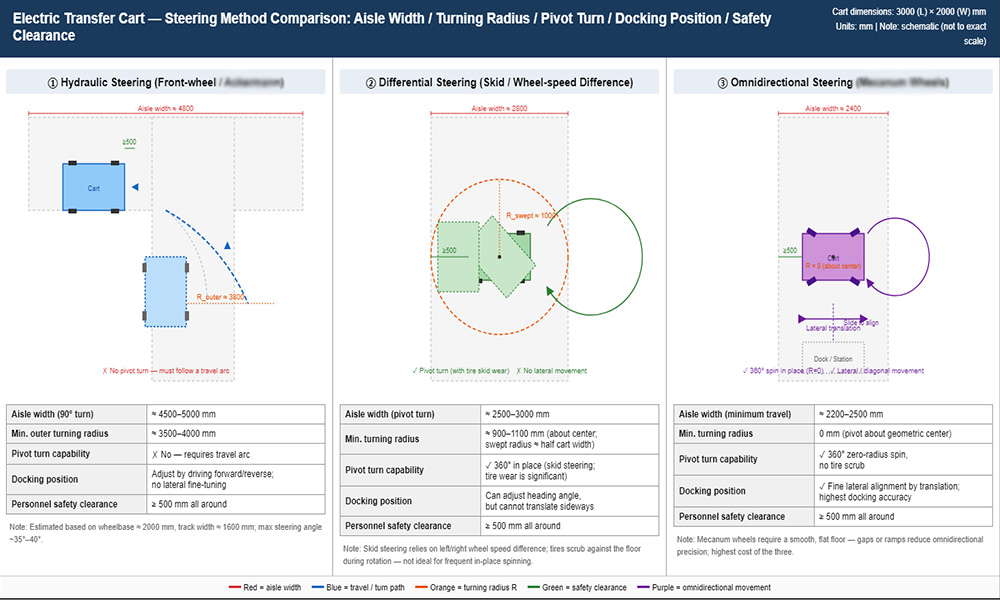
Many factories and warehouses need to move large, heavy materials through narrow aisles. Before purchasing a trackless transfer cart, it is important to check the available turning space, steering method, and clearance required for safe operation.
The right steering system depends on the cart's dimensions, load, travel route, and working environment.
Case A: Choosing a Steering System for a Narrow Workshop
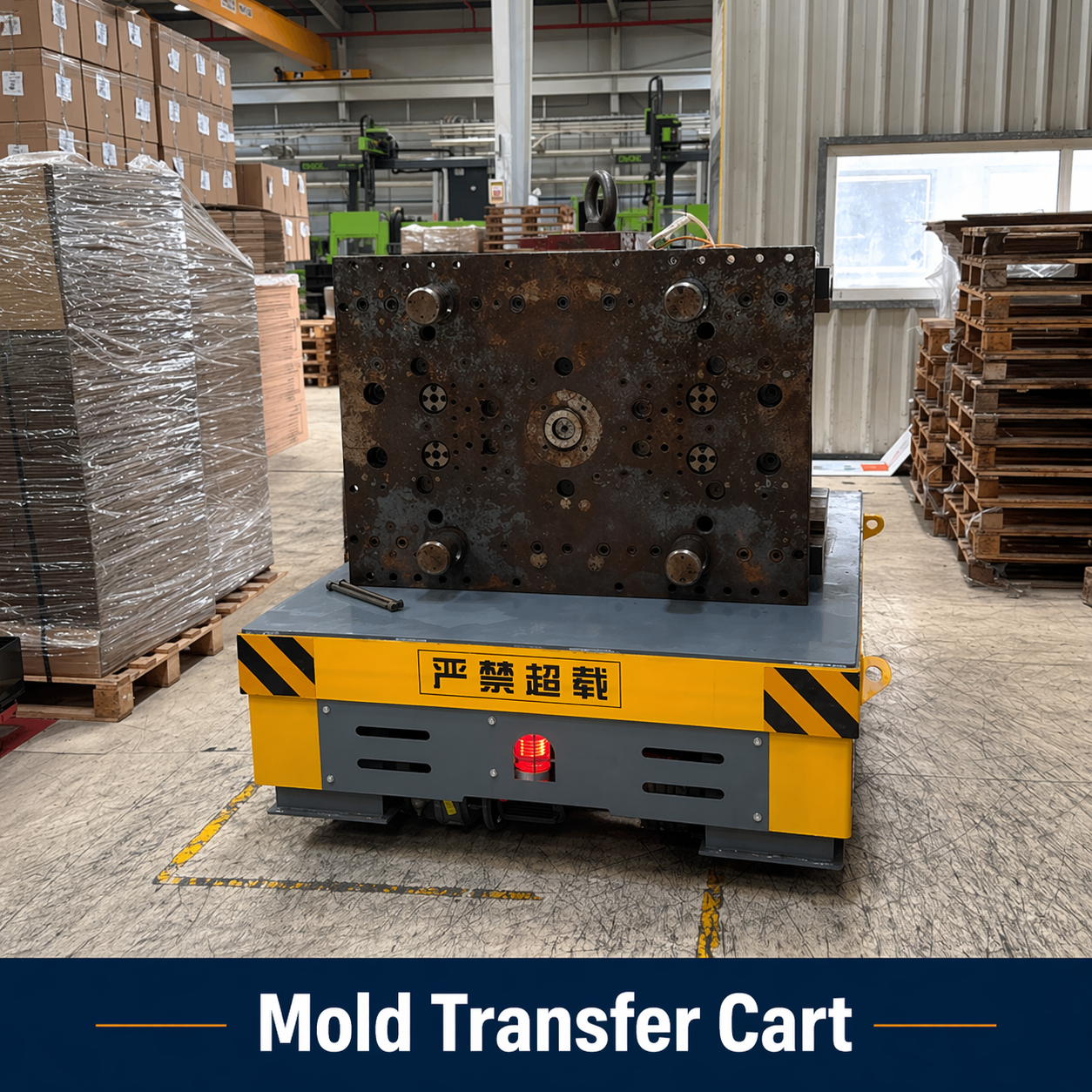
A customer in Mexico needed to transport molds through narrow warehouse aisles. The molds were relatively compact, but the limited space made maneuverability a key requirement.
We recommended a trackless transfer cart with differential steering. By controlling the left and right drive wheels at different speeds, the cart can turn within a small space and rotate 360 degrees on the spot under suitable conditions. This configuration was a good fit for the customer's mold handling requirements.
Case B: What Configuration Is Needed for Transporting Steel Coils?
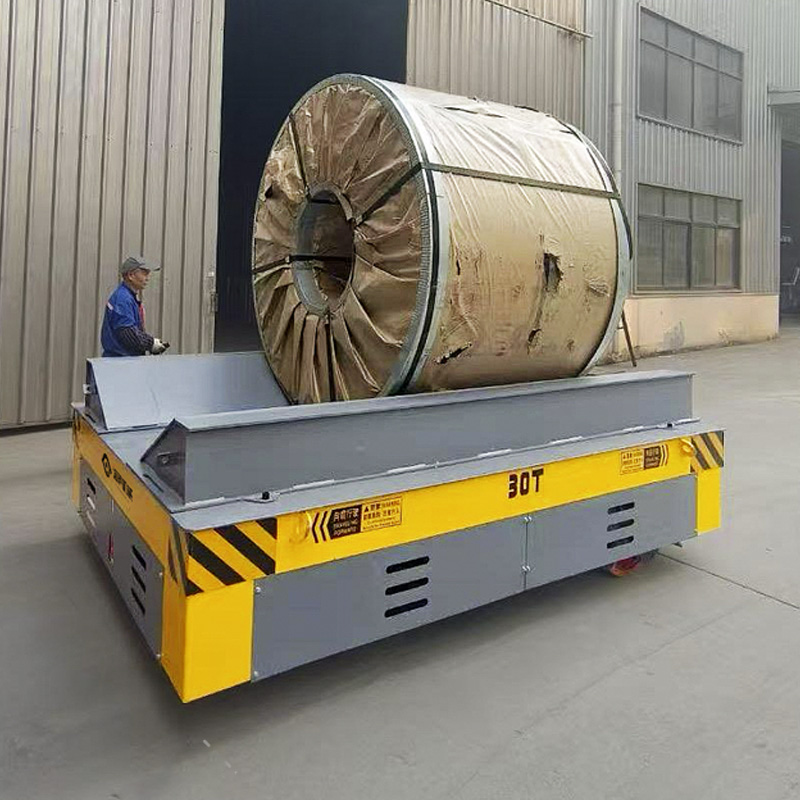
Steel coils require a suitable support structure to keep them stable during transport. A flat deck alone may not provide enough protection against rolling or shifting.
For this type of application, we can fit the transfer cart with a V-shaped cradle or U-shaped support channel. The shape helps hold the coil in position and reduces the risk of it rolling during movement. The support structure can be customized according to the coil diameter, width, weight, and loading method.
Case C: Choosing a Transfer Cart for Oversized Machinery
A major oil company in Saudi Arabia needed to move large pieces of equipment inside its factory. The workshop had plenty of open space, but the equipment was unusually large. The transfer cart ordered for the project measured 9 meters long and 4 meters wide.
With a cart of this size, a conventional hydraulic steering system would have required considerable space to turn. We therefore recommended an omnidirectional transfer cart.
This type of cart can move forward and backward, travel sideways, and rotate in place, depending on its wheel configuration. These movements make it easier to position oversized equipment and move it through areas where conventional steering would be less practical.