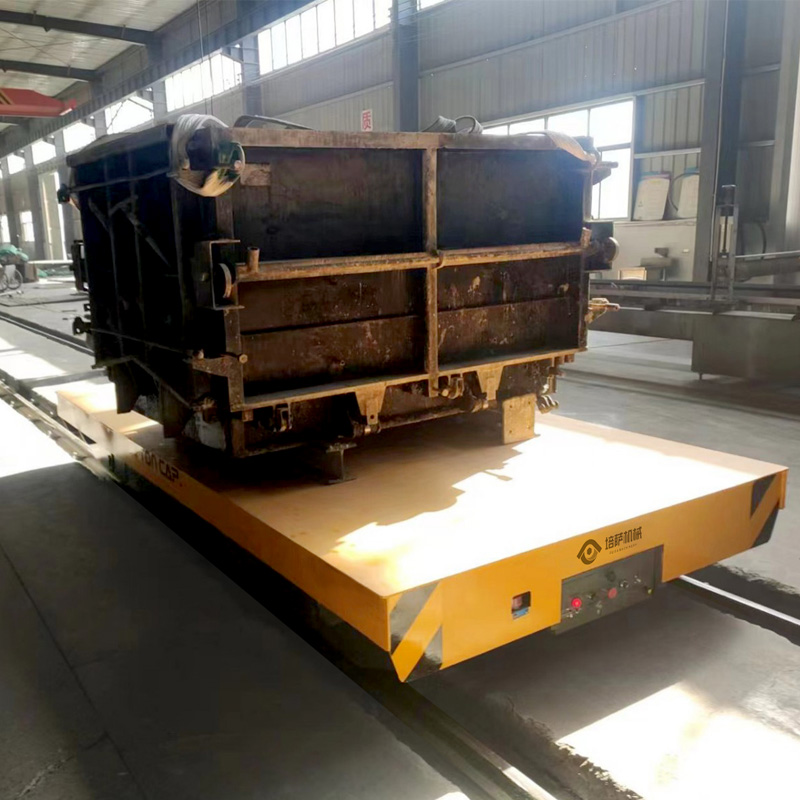
How to Choose the Best Rail Transfer Cart? Providing the Optimal Solution for Factory Transportation
In today's intelligent industrial era, manufacturing and industrial workshops are equipped with numerous smart devices to transport heavy goods, such as raw materials, semi-finished products, and finished products. Factory logistics and transportation are essential processes in any facility. For factories, finding a suitable, effective, and efficient solution can save significant time, effort, and cost.
This article focuses on rail transfer cart solutions for fixed-route transportation tasks.
First, let’s understand what a rail transfer cart is. It relies on a rail system to move materials from point A to point B and back, providing efficient and stable transportation.
This type of electric transfer cart typically consists of a motor, reducer, travel mechanism, control system, body frame, and safety devices. It can transport goods and raw materials between different production lines and workstations, making it very popular among users.
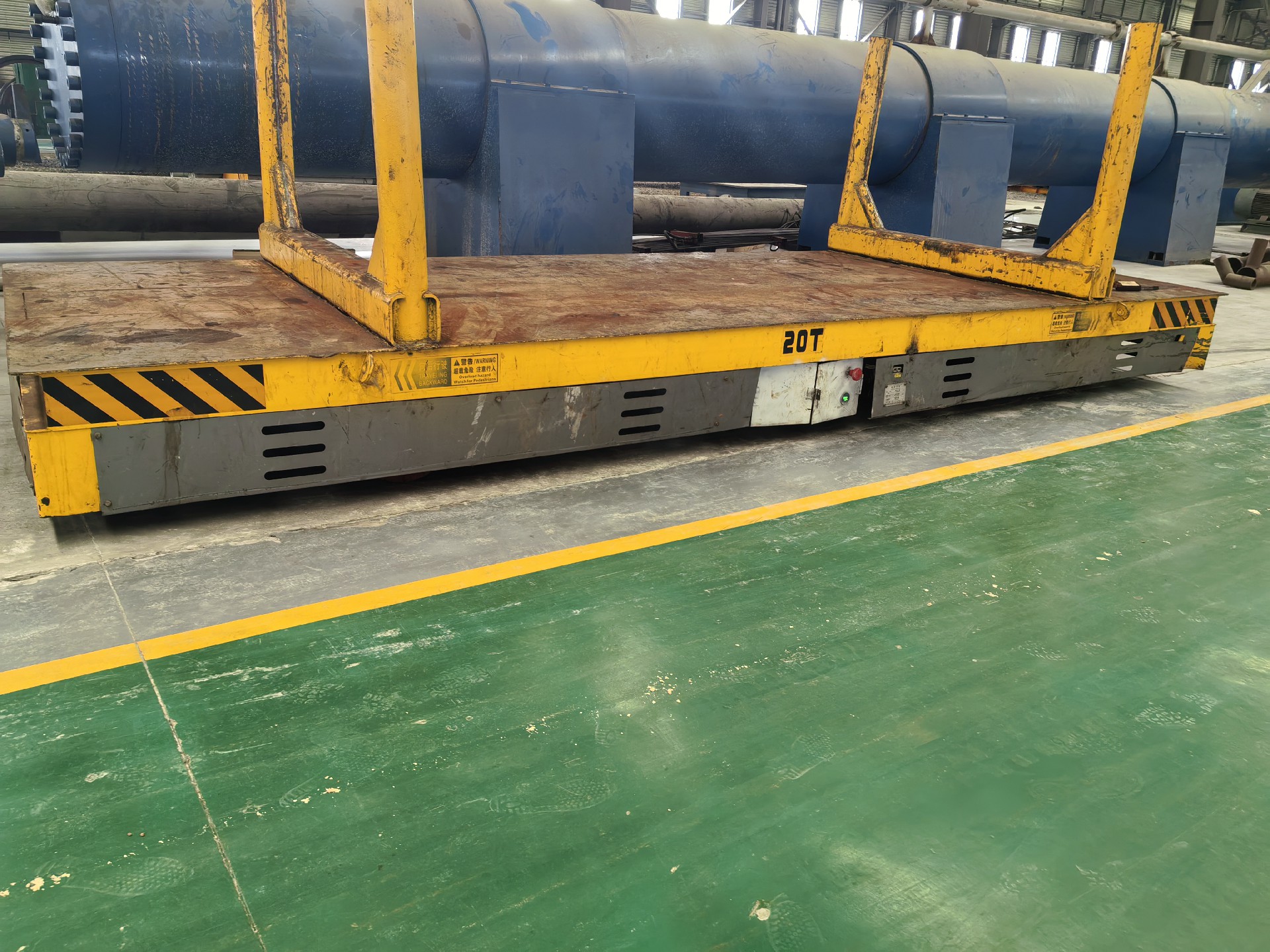
1. Cart Load Capacity and Dimensions
Users need to determine the maximum weight the cart will carry. This is a critical factor in designing the transportation plan. Manufacturers must clearly understand the cargo type and weight before proceeding with the cart design.
2. Transport Speed of the Rail Transfer Cart
Customers should match the cart’s speed to the production line’s efficiency. For large and heavy cargo, we recommend a safe speed, typically between 5 and 30 m/min. Any special requirements should be discussed with the manufacturer in advance, as they will directly affect the reducer configuration.
3. Route Planning
Customers should plan their transport routes and complete track system installation beforehand. If the route includes curves, L-shapes, or S-shaped paths, these must be communicated to the manufacturer in advance.
4. Automated Operation System
If your factory uses automated operations, the rail transfer cart can be configured for automated movement and integrated into your production line, reducing labor costs.
5. Power Supply and Battery Life
Power supply type and battery life are important considerations and should match your transportation environment. For high-frequency transport, cable power or low-voltage rail power is recommended. If endurance is less critical, battery power or cable reels are also suitable options.
6. Other Special Features
Additional tabletop features can be customized based on the shape of the cargo. For example, V-shaped supports can be added for transporting steel coils, and lifting platforms can be designed for mold transport.
The rail transfer cart is a flexible, customizable solution. PEISA can tailor the design based on the user’s requirements and the specific characteristics of the cargo.