Power Supply Methods for Rail Powered Transfer Carts
In modern industrial automation and efficient material handling, low-voltage rail electric flat carts have become a common type of rail transfer vehicle used in workshops, warehouses, and assembly line logistics systems, thanks to their stable operation, high load capacity, and ease of use.
Electricity is the primary power source for electric transfer carts, and the method by which it is supplied directly impacts operational safety, continuity, and maintenance costs.
This article provides an in-depth analysis of several common power supply methods for low-voltage rail powered transfer carts, including their technical principles and applicable scenarios.
1. Collector Shoe
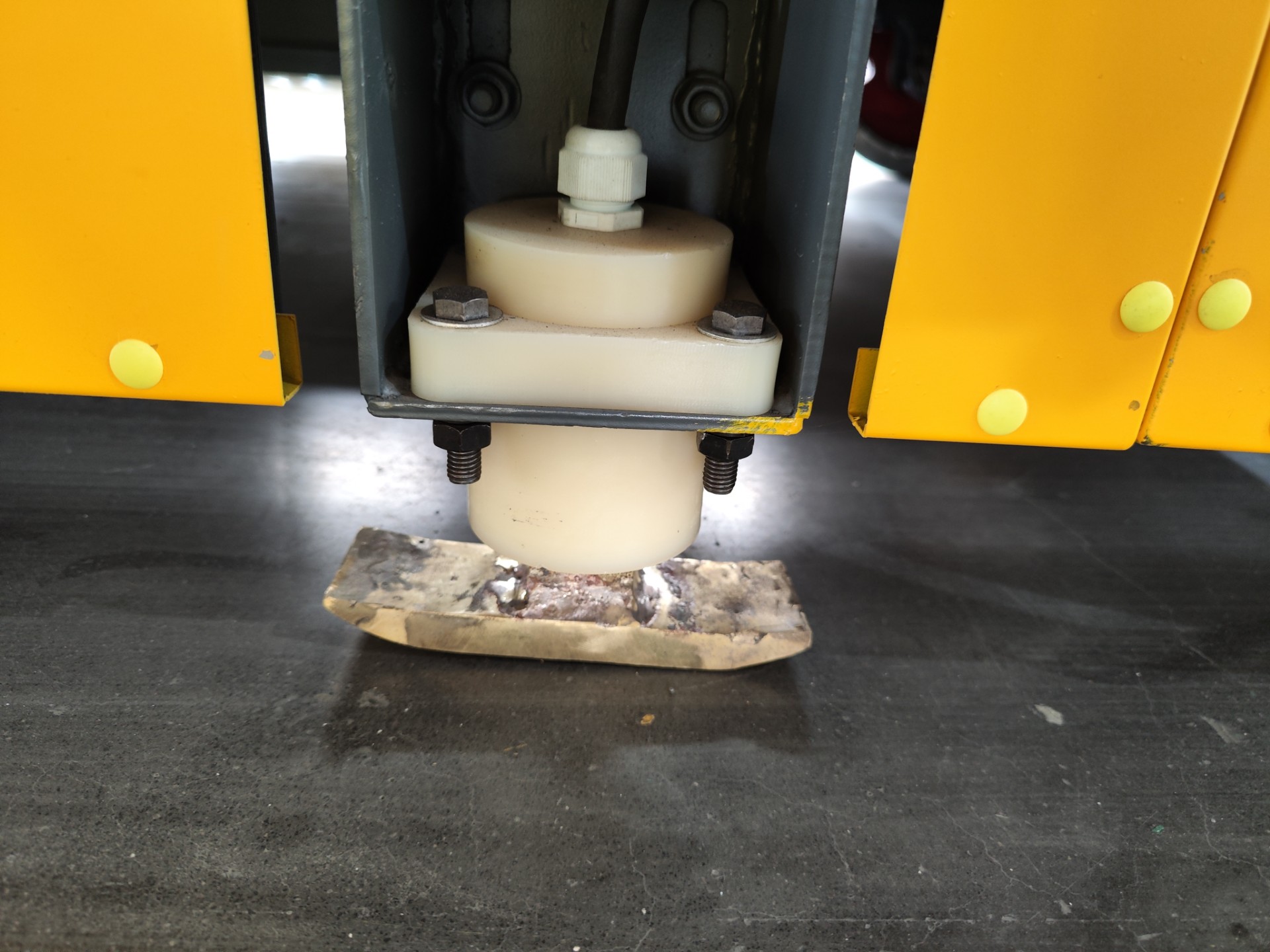
The collector shoe is the most basic and widely used power supply device in rail-powered transfer carts. A metal collector shoe or carbon brush, mounted on the bottom of the flatcar, makes sliding contact with the conductive surface on the side or bottom of the rail to transmit current.
Operating Principle: Current flows through physical contact, forming a circuit from the power supply to the control system.
Technical Features:
Requires high rail cleanliness; excessive dust or iron filings can interfere with contact.
Suitable for low-voltage systems (e.g., 24V or 36V).
Simple structure and easy maintenance, but regular cleaning and replacement of contact elements are necessary.
Applications: Frequent short- to medium-distance travel and moderate load handling on production lines.
2. Conductive Wheels
Conductive wheels use the contact between the transfer cart wheels and the live rails to provide power. The left and right wheels connect to the positive and negative terminals, respectively, forming a circuit.
Operating Principle: The wheels themselves act as conductors, channeling rail power to the control system.
Technical Features:
No extra collector is needed, resulting in a more compact structure.
Requires excellent rail insulation to prevent short circuits between wheels.
Fault diagnosis is more complex, with relatively higher repair costs.
Applications: Transport systems requiring compact design and space optimization.
3. Conductor Rail Systems
Conductor rails (also known as “third rails”) offer a more stable and efficient power supply, commonly used in long-distance electric flatcar systems. A separate conductive rail is installed alongside the track, with collector shoes sliding along it to draw power.
Operating Principle: The collector shoe glides against a dedicated contact rail to deliver electricity.
Technical Features:
Suitable for long-distance transport and high current demands.
Requires protective covers to prevent electric shock.
Slightly higher installation cost but offers excellent longevity and reliability.
Applications: Large workshops, automated logistics systems, and extensive warehouse transport setups.
4. Contact Brushes / Carbon Brushes
Carbon brushes, mounted with springs, maintain firm contact with the conductor rail, minimizing resistance and improving contact stability. Compared to traditional metal sliders, carbon brushes show lower wear and longer service life.
Operating Principle: High-elasticity carbon brushes slide smoothly across conductive surfaces, maintaining stable power delivery.
Technical Features:
Well-suited for rapid movement or frequent start/stop cycles.
Softer contact reduces sparks and surface wear.
Requires regular inspection and replacement to prevent power interruptions.
Applications: Automated assembly lines and high-frequency usage environments.
5. Key Design Considerations
When selecting a power supply method, system design must consider multiple safety and technical factors:
Track Insulation: Insulating pads should be installed under the tracks to prevent leakage and ensure electrical safety in workshop environments.
Segmented Power Supply: Especially for long-distance operations, segmenting the power supply reduces voltage loss and ensures consistent power across all sections.
Comprehensive Safety Systems: Features such as overload protection, short-circuit detection, and power failure alarms help ensure system stability and operational safety.
Conclusion
Among various electric transfer cart solutions, the Rail Powered Transfer Cart remains indispensable in industrial settings due to its mature power system and excellent operational stability. A scientifically chosen power supply method not only boosts transport efficiency but also significantly influences maintenance costs and safety.
Therefore, in practical applications, the optimal power supply technology should be selected based on operational distance, load requirements, and usage frequency to build a reliable and efficient material handling system.


