In modern factory logistics systems, the efficiency of material and equipment transfer directly determines production pace. Traditional forklifts and manual handling methods are no longer sufficient to meet the demands of lean manufacturing, and electric transfer carts have become a mainstream solution due to their environmental friendliness and high efficiency. Among them, manually driven electric platform trucks and remote-controlled trackless transfer carts are two widely used options, each suited to distinctly different operating scenarios. How, then, should factories choose between them?
I. Manually Driven Electric Platform Trucks: Precise and Controllable “Mobile Workstations”
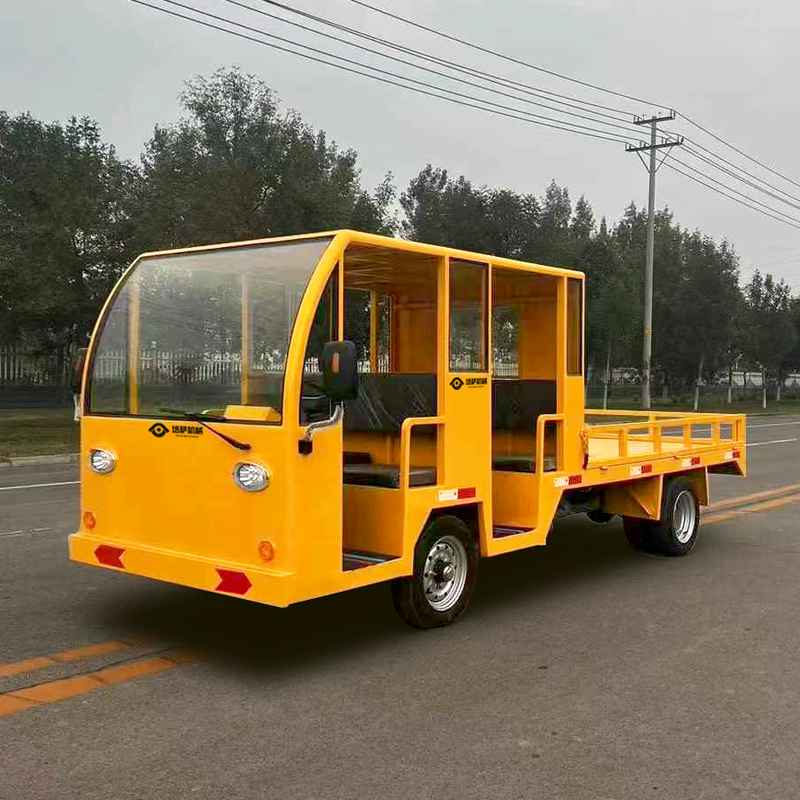
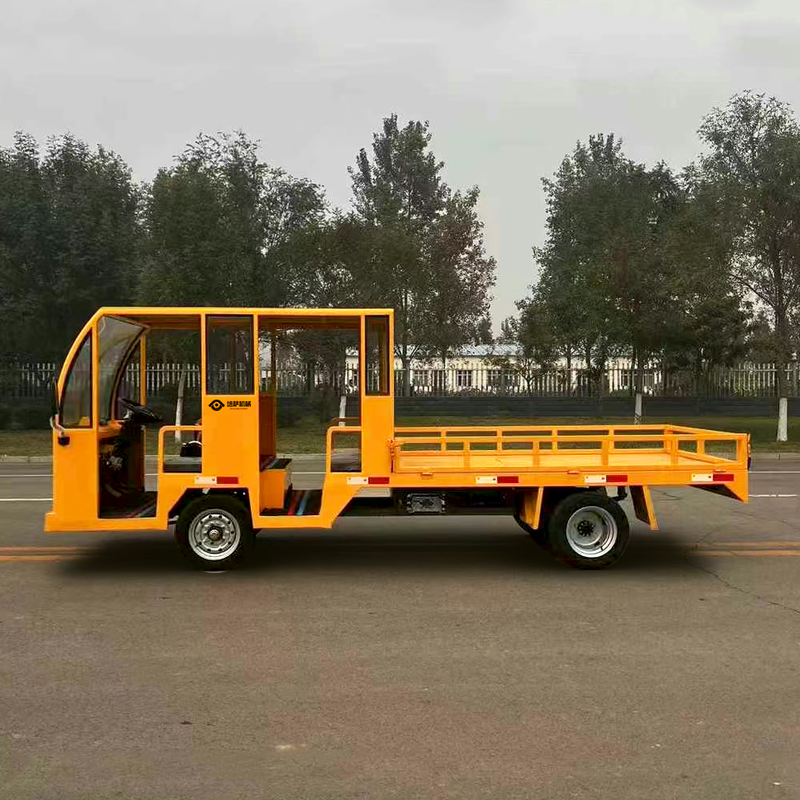
The defining feature of manually driven electric platform trucks is their dedicated driver’s cab. Operated by an onboard driver, they function as “mobile workstations” within the factory, emphasizing precise control and operational stability.
Their core advantages can be summarized in four aspects.
First, high-precision control with an onboard operator: the driver benefits from a stable, wide field of vision, allowing quick responses in complex workshop environments and narrow passages. This makes the vehicle particularly suitable for applications requiring frequent obstacle avoidance and accurate positioning.
Second, clear responsibility and enhanced safety: the driver can continuously monitor both the cargo and the surrounding environment, enabling timely avoidance of collision risks. The dedicated operator model also simplifies safety management by clearly defining responsibility.
Third, suitability for medium- to long-distance transportation: on complex routes involving multiple workshops and frequent turns, onboard operation avoids potential signal delays or blind spots associated with remote control, while offering greater comfort and reduced fatigue during extended operating hours.
Fourth, strong functional scalability: these vehicles can easily be equipped with reversing cameras, onboard information systems, warning lights, and other auxiliary devices to meet diverse operational requirements.
However, certain limitations should also be considered. A full-time or part-time driver is required, increasing labor costs. Operators must undergo professional training, and their skill level and sense of responsibility directly affect safety and efficiency. In addition, the driver’s cab occupies some vehicle space, which may limit use in extremely confined working environments.
II. Remote-Controlled Trackless Transfer Carts: Flexible “Wireless Control Hands”
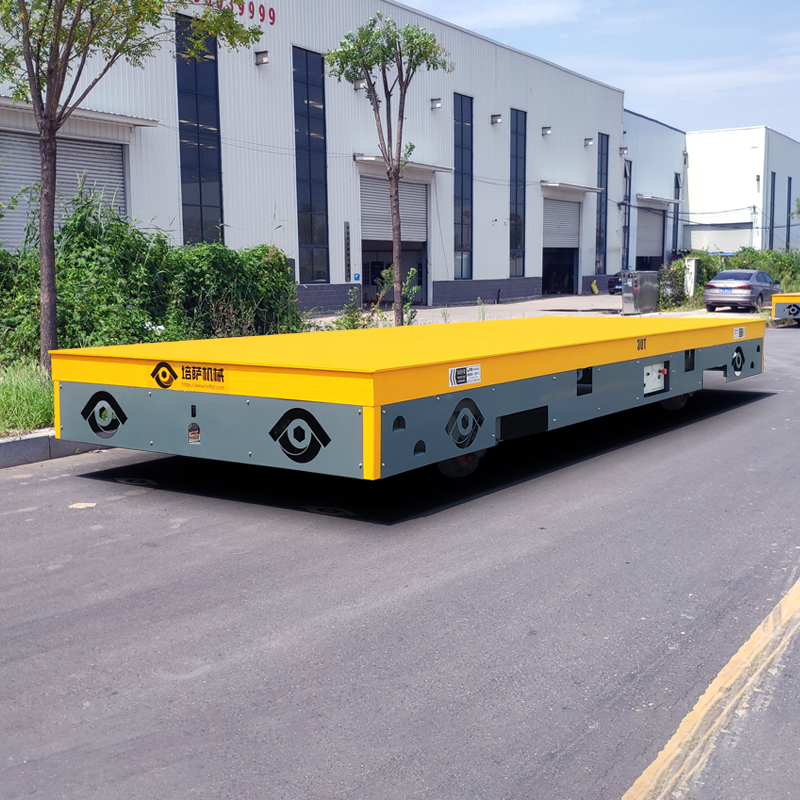
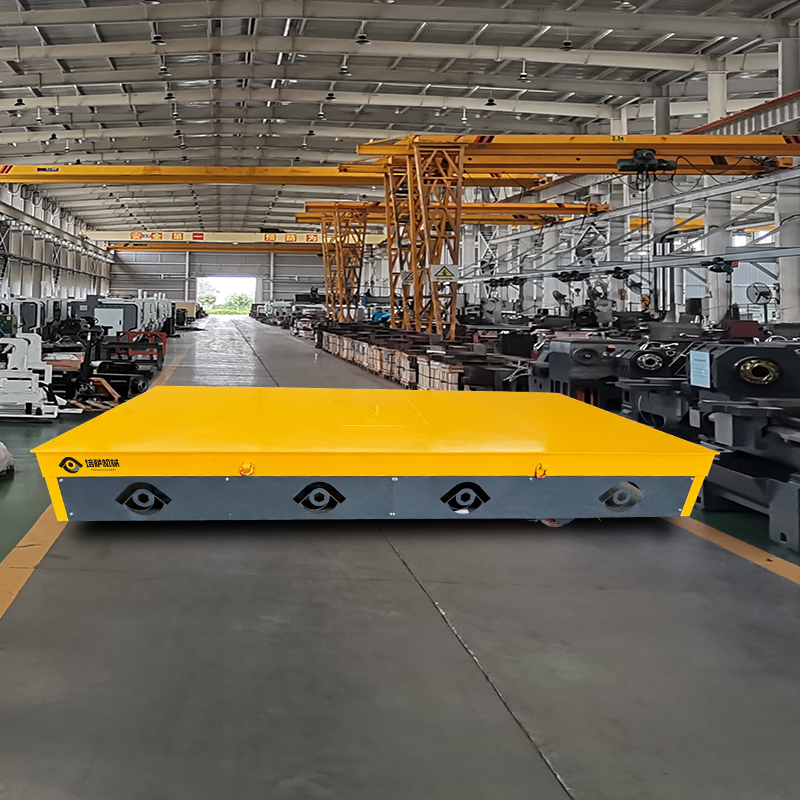
Remote-controlled trackless transfer carts are operated via wireless remote control, allowing operators to remain off the vehicle and move freely around it to adjust their viewing angle. They function as “wireless control hands” in factory logistics, emphasizing flexibility, convenience, and adaptability.
This model also offers several notable advantages.
First, flexible operation with an unobstructed view: operators can choose the optimal observation position, which is especially valuable when cargo blocks forward visibility or when equipment must be precisely positioned at a specific workstation. Walking ahead of the vehicle to guide it enables high-precision alignment.
Second, reduced manpower requirements and improved efficiency: in non-continuous transfer scenarios, one operator can manage multiple carts while also handling loading and unloading tasks, significantly improving labor utilization and eliminating time spent mounting and dismounting vehicles.
Third, ideal for short-distance, high-precision applications: in confined spaces requiring extremely accurate positioning—such as assembly line docking, machine tool loading/unloading, or warehouse shelving—the flexibility of remote control is fully realized.
Fourth, enhanced safety under special working conditions: when handling toxic, high-temperature, or specially protected materials, operators can remain at a safe distance, effectively reducing exposure to potential hazards.
Nevertheless, remote-controlled transfer carts also have limitations. Operators must simultaneously monitor the vehicle, route, and surroundings, which can lead to fatigue and distraction during extended operation. In workshops with complex electromagnetic environments, there is a risk of signal interference or delay. For long-distance transfers, operators must walk alongside the vehicle, potentially reducing efficiency and increasing physical workload. Additionally, since operators are not onboard, stricter management and safety regulations are required in areas with mixed personnel traffic.
III. Comparative Summary and Selection Recommendations
To provide a clearer overview of the differences between these two solutions, the following section summarizes their key characteristics for practical selection.
| Feature Dimension | Manually Driven Electric Platform Truck | Remote-Controlled Trackless Transfer Cart |
|---|
| Control Method | Onboard operation by a dedicated driver | Ground-based wireless remote control |
| Labor Requirement | Requires a full-time dedicated driver | One operator can control multiple carts |
| Positioning Accuracy | Good, dependent on driver skill | Excellent, ideal for high-precision positioning |
| Route Adaptability | Medium- to long-distance routes with complex paths | Short-distance routes with relatively simple paths |
| Safety Level | High, fixed field of vision with operator onboard | Relatively high, depends on operator vigilance |
| Typical Applications | Inter-workshop transportation, batch material transfer | Production line docking, machine tool loading/unloading, warehouse handling |
| Overall Cost | Vehicle cost + ongoing driver labor cost | Slightly higher vehicle cost, more flexible labor cost |
Selection Recommendations
Choose a Manually Driven Electric Platform Truck if your factory meets the following conditions:
Transfer routes are long, span multiple areas, and follow relatively fixed paths.
Single transfer tasks have extended durations, requiring operator comfort throughout the operation.
You aim to establish a clear management system with defined responsibilities for vehicle operation.
The transported materials are high in value or bulky, necessitating continuous supervision by the driver.
Choose a Remote-Controlled Trackless Transfer Cart if your factory has these requirements:
Operations primarily involve short-distance, high-frequency point-to-point transfers.
High positioning accuracy is essential, for seamless integration with automated production lines.
Work areas are confined or contain blind spots, requiring multi-angle observation.
You want to optimize labor utilization, enabling one operator to manage multiple carts or tasks simultaneously.
It is important to note that neither manually driven platform trucks nor remote-controlled trackless carts are inherently superior; the key is their suitability for specific operational scenarios. Before making a selection, factories should carefully evaluate their material characteristics, transfer workflows, workshop layout, and labor structure. If possible, inviting the equipment supplier for an on-site trial run can provide practical insights into which solution best aligns with production rhythms, injecting efficiency, safety, and reliability into your factory logistics.


